
Winter train travel in Europe is the version most people skip, and that is exactly why it is worth doing. Fares soften outside the festive peak, cities empty of queues, and the scenery that looks pleasant in July looks extraordinary under snow. The trade is reliability, and the way to enjoy winter rail is to plan for disruption rather than hope it away.
This guide to winter train travel in Europe covers what actually goes wrong, the passenger rights that still apply when weather is to blame, how to build an itinerary that absorbs delay, and which routes genuinely improve in the cold. It is written for the traveller who would rather know the risks than be surprised by them.
Last reviewed and updated: October 8, 2026. How this guide was researched: this winter train travel in Europe guide is desk research, not a trip report. Passenger rights are quoted from the European Commission’s own Your Europe guidance, cited at the end, because operator FAQs paraphrase the regulation inconsistently. We did not take these journeys for this article, and we quote no fares.
Free download: Eco Rail-First Trip Planner
A fast, practical checklist + templates for planning low-impact trips (without decision fatigue).
Why winter is the underrated season for European rail
The case for winter train travel in Europe is practical rather than romantic.
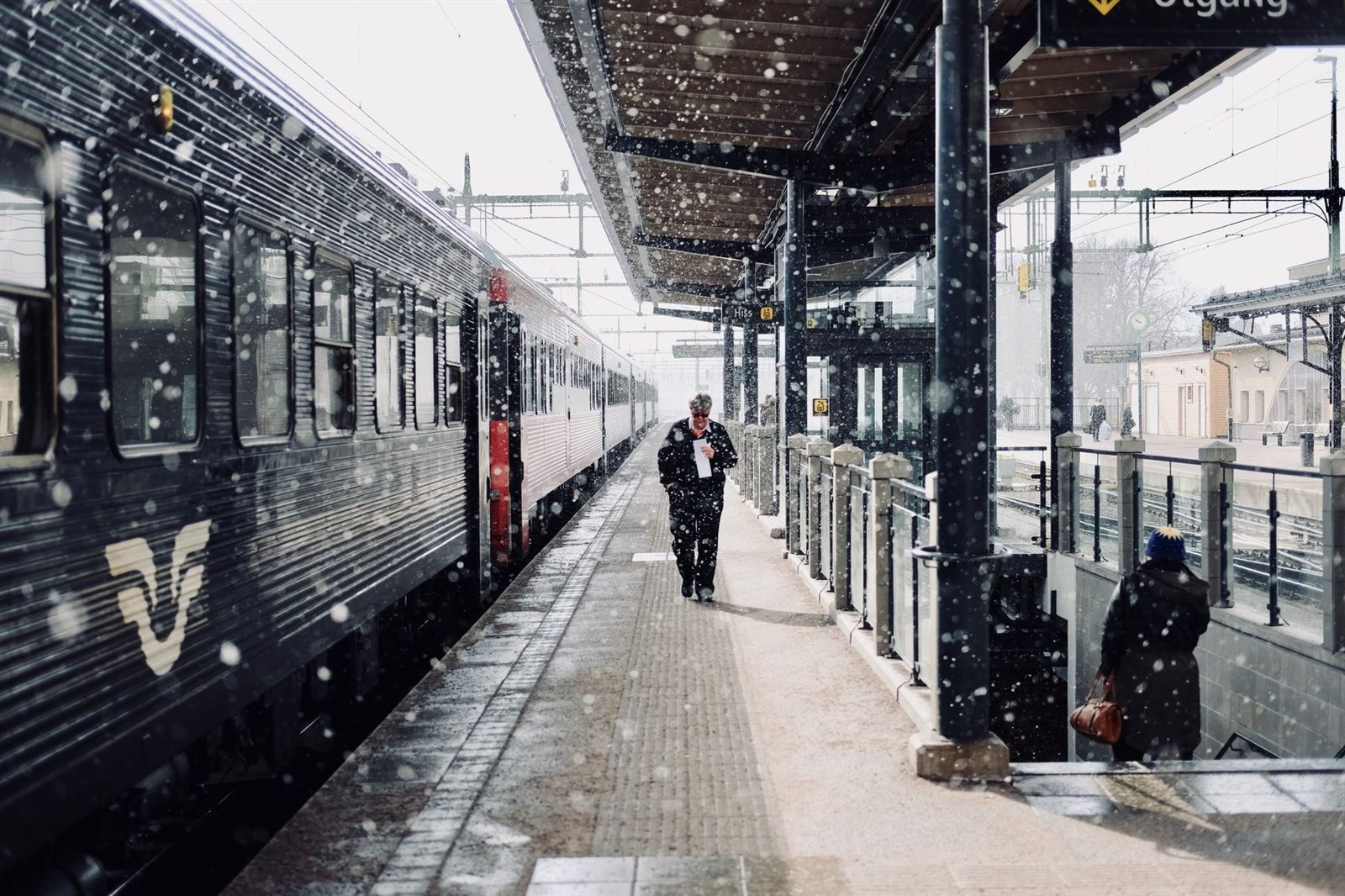
Trains run warm and dry while you watch weather you would not want to stand in. Unlike a winter flight, where the whole experience happens on the ground in a cold queue, rail puts the difficult part outside the window. Stations are in city centres, so arriving in sleet means a short walk rather than a long transfer.
There are quieter advantages too. Outside the Christmas and New Year peak, trains are less full, so an unreserved seat is easier to find and a quiet carriage is genuinely quiet. Museums and historic sites are at their least crowded. And a journey that is merely scenic in summer becomes properly memorable when the valleys are white.
What actually goes wrong in winter
Knowing how winter train travel in Europe fails lets you plan around it instead of worrying generally.
- Points and switches freeze. This is the classic cause of widespread delay, because a single failed junction backs up everything behind it.
- Ice on overhead lines slows electric services and occasionally stops them.
- Snow on the track matters less than people assume on main lines, which are cleared aggressively, and more on rural branches.
- Rolling stock faults rise in extreme cold, particularly doors and heating.
- Staff and crew disruption compounds weather problems, because displaced crews cannot reach their next train.
- Short daylight is not a failure but it is a planning factor, since an afternoon departure may run mostly in the dark.
Crucially, most winter disruption is delay rather than cancellation, and delay is survivable if your itinerary has slack. The journeys that go badly are almost always the ones built with tight connections.
Winter train travel in Europe: your rights when a journey falls apart
This is the section worth reading twice, because the rules are more generous than most travellers realise and contain one important catch.
Compensation thresholds
Under EU rail passenger rights, if you are informed at departure that your train will arrive at your final destination with a delay of 60 minutes or more, you are entitled to compensation of 25 percent of the ticket price for a delay between one and two hours, and 50 percent for a delay of two hours or more. Payment is due within one month of your request.
The same thresholds apply to a cancellation that would leave you arriving more than 60 minutes late. You may instead choose a refund within 30 days, or continue or re-route at the earliest opportunity at no additional cost.
The extreme weather catch, and what survives it
Here is the part that matters in winter specifically, and it surprises people.
Compensation is not due if the company can prove the delay or cancellation was caused by events it could not prevent, and the guidance names extreme weather conditions, major natural disasters or pandemics as examples. So a genuine blizzard can remove your right to the 25 or 50 percent payment.
However, and this is the crucial half that often goes unmentioned: your refund, re-routing and assistance rights still apply. The operator cannot use bad weather to avoid getting you to your destination or putting you up. Those obligations survive the exemption entirely.
One further detail worth knowing: strikes by rail company staff are not considered extraordinary circumstances, so compensation remains payable for those.
The table below summarises what you are owed, and what the weather exemption does and does not remove.
| Situation | Normally | When extreme weather is proven |
|---|---|---|
| Delay of 1 to 2 hours | 25% of the ticket price | Not payable |
| Delay of 2 hours or more | 50% of the ticket price | Not payable |
| Refund of the ticket | Within 30 days | Still applies |
| Re-routing at no extra cost | At the earliest opportunity | Still applies |
| Meals and refreshments | Proportionate to the wait | Still applies |
| Hotel and transfers | Where physically possible | Still applies |
| Staff strike | Compensation payable | Not an extraordinary circumstance |
Meals, accommodation and the overnight problem
With a delay at departure or arrival of 60 minutes or more, you are entitled to meals and refreshments proportionate to the waiting time. If an overnight stay becomes necessary, you are entitled to a hotel or other accommodation where and when physically possible, plus transport between the station and the hotel.
That phrase, where and when physically possible, is doing real work during a regional weather event when every hotel is full. In practice, ask at the station promptly rather than after several hours, and keep receipts if you arrange your own room. Our guide to European train ticket refund rules covers the fare-type side, which interacts with all of this.
Connections: the single biggest winter mistake
If you change one thing about how you plan, change this.
A connection that works in June will fail in January. Build at least an hour between trains on a winter itinerary, and considerably more where the connection is the last of the day or involves crossing a large station. The cost of an extra hour at a station café is trivial against the cost of a missed final connection in a town you did not intend to sleep in.
Three rules that follow from that:
- Avoid the last train of the day as your connecting service wherever possible. If it goes, you are stuck.
- Prefer through services to multi-leg routes in winter, even if they take longer. Fewer changes means fewer chances to miss one.
- Check whether your ticket protects the connection. A single through ticket usually obliges the operator to re-route you; separate tickets usually do not.
That third point is the one that costs people money. Two cheap separate tickets are not equivalent to one through ticket when something goes wrong. Our European train booking mistakes guide covers the distinction in detail, and building a backup plan applies equally to weather.
Booking strategy for winter
Winter train travel in Europe rewards a different booking approach from summer.
Favour flexible fares on the legs where disruption would be most expensive, typically the first leg of the trip and any leg with a hard deadline at the end, such as reaching an airport or a ferry. Cheap advance tickets are excellent for the middle of a trip where a later train costs you nothing but time.
Reserve seats where reservations are available, particularly around the festive period. A crowded train in winter is a train full of wet coats and large bags, and standing for three hours is considerably worse than in summer. See seat reservations on European trains for where they are compulsory.
On passes versus tickets, winter slightly favours passes for flexible itineraries, because the ability to take a different train without buying a new ticket is worth more when trains are unreliable. Weigh it with best rail passes for Europe and rail pass versus point-to-point tickets.
Scenic routes that are better in winter
Some lines make winter train travel in Europe genuinely better than the summer version, and they are worth building a trip around.
Alpine routes through Switzerland and Austria are the obvious case: the same valleys that look green and pleasant in August become genuinely spectacular under snow, and the trains are heated, punctual and designed for the conditions. Scandinavian routes offer a different reward, with long blue twilights and the possibility of snow-covered forest for hours.
Central European routes come into their own around the Christmas market season, when the cities at either end of the journey are the attraction. And coastal routes in southern Europe are a quiet winter pleasure, because mild weather and almost no other tourists make for a very different trip from the summer version.
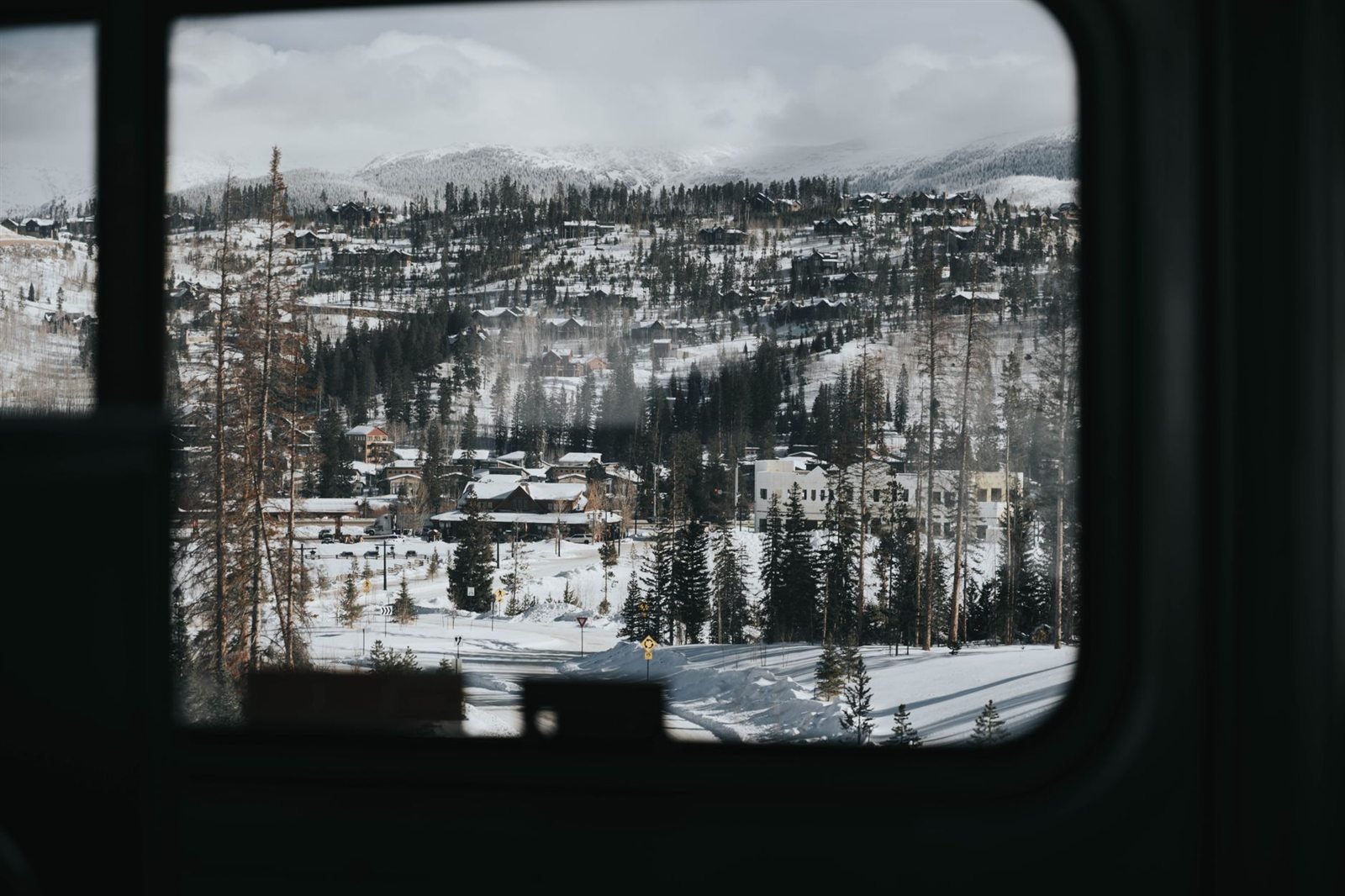
Daylight is the planning constraint that trips people up. In northern Europe in December, useful light may last only from mid-morning to mid-afternoon, so a scenic leg booked for late afternoon delivers a dark window. Put the scenery in the morning and the dull connecting legs in the evening. For route ideas, see Europe’s most scenic routes.
Night trains in winter
Night trains suit winter particularly well, and the reason is daylight rather than comfort.
When the useful day is short, spending the dark hours travelling converts dead time into progress. You arrive in the morning with a full day ahead, which in December is a meaningful gain rather than a marginal one. The carriages are warm, and you skip a hotel night.
Two winter-specific cautions. First, book a berth rather than a seat: a reclining seat is tolerable in May and genuinely unpleasant in January when the carriage is cold at 4am. Second, allow more slack than usual on the morning after, because a delayed night train arrives late into a day you have already planned. See best night trains in Europe for routes and berth types.
What to pack for a winter rail trip
Packing for trains in winter differs from packing for a winter holiday, because you will be moving luggage through stations rather than unpacking once.
- Layers rather than one heavy coat. Carriages are warm, platforms are not, and you will swing between the two repeatedly.
- Genuinely waterproof footwear with grip. Station forecourts and cobbled old towns are slippery.
- A bag you can carry up stairs. Lifts fail, and snow makes ramps treacherous.
- A power bank. Cold drains phone batteries fast, and you will be using the phone for live timetables.
- Snacks and a refillable bottle. Catering is the first thing to fail on a disrupted service.
- Offline tickets and maps. Download them, because station wifi collapses when a train is cancelled and everyone reaches for a phone at once.
- A small towel or spare socks. Unglamorous, and the single most appreciated item when you arrive wet.
For bag choice specifically, see best luggage for train travel and check European train luggage rules before you pack something large.
Station time, and how to spend a long wait
Assume winter train travel in Europe will involve some waiting, and the waiting becomes much less unpleasant.
Major European stations are genuinely good places to be stuck: they have cafés, left luggage, shops and warm waiting areas, and many have paid lounges that are worth the modest cost during a long delay. Smaller stations have none of this, which is another argument for connecting at a large hub rather than a village junction in January.
If a delay is announced, do three things immediately rather than after an hour. Ask staff for a written or app-based confirmation of the delay, since you will need it for any claim. Check the operator’s app for re-routing options, because the first passengers to ask usually get the best alternatives. And find out where meals or accommodation would be arranged if the delay extends, before a queue forms.
Live information matters more in winter than at any other time, so have a working app before you travel. Our comparison of the best train apps for Europe covers which handle disruption well.
The festive peak, and the dates to avoid
Winter train travel in Europe is not one season for pricing and crowding; it is three.
Early December is quiet and often the best value of the whole year, with Christmas markets open and trains not yet full. The week before Christmas through to just after New Year is the peak: expensive, heavily booked and the one period where seat reservations are close to essential. January and February are quiet again, and often the cheapest travel of all, with the trade-off that the weather risk is at its highest.
If flexibility is possible, early December and late January are the sweet spots. If you must travel over the festive days themselves, book as far ahead as the operator permits, because those specific trains sell out months in advance rather than weeks.
Ski trips by train, which work better than people expect
Rail is an unusually good fit for a ski holiday, and winter train travel in Europe is at its most practical here.
Many alpine resorts sit at the end of a railway line or a short bus ride from one, so the train delivers you closer to the accommodation than an airport does. You also skip the two parts of a ski flight everyone dislikes: oversized baggage charges and a long transfer coach on snowy mountain roads in the dark.
Three practical points make the difference between a smooth ski rail trip and an awkward one:
- Check ski carriage rules per operator. Skis and boards are usually permitted, but the rules on bag size, carriage position and whether a reservation is needed vary, and they are stricter on high-speed services.
- Favour the direct seasonal services where they exist. Several operators run winter-only trains aimed specifically at resort traffic, and they are designed for the luggage.
- Arrive the day before. A lift pass starting the morning after you arrive removes all the pressure from a delayed journey.
Hiring equipment at the resort rather than carrying it changes the calculation entirely, and for a single week it is often the better answer. The train journey becomes an ordinary one, with ordinary luggage.
Comfort, heating and the realities of a winter carriage
Modern European carriages are well heated, which creates its own small problems worth anticipating.
The first is the swing between a warm carriage and a cold platform, repeated at every change. Dressing in layers you can shed at your seat is far more comfortable than a single heavy coat you either wear or carry. The second is dryness: heated carriages are very dry, so a refillable bottle matters more in winter than in summer.
Condensation is the third, and it affects the view. Windows mist in cold weather, particularly on busy trains, and a misted window ruins a scenic leg. Seats away from the doors, which open repeatedly and chill the vestibule, tend to be both warmer and clearer.
Finally, consider wet luggage. Bags come aboard covered in snow, which melts. An outer bag that tolerates water, and keeping electronics in an inner dry layer, prevents the small misery of a damp laptop bag three hours into a journey.
Which countries handle winter best
Reliability genuinely varies, and the pattern is less about wealth than about how routinely a country deals with snow.
Alpine and Nordic networks are generally the most robust, because severe winters are normal there and the infrastructure, stock and operating procedures assume it. Trains in Switzerland, Austria and Scandinavia run through conditions that would stop services elsewhere.
Networks in milder maritime climates can be more fragile, precisely because heavy snow is unusual. A cold snap that an alpine network absorbs without comment can cause widespread disruption where it arrives once every few years, simply because the equipment and the plans are not built around it.
The practical conclusion is counter-intuitive. A January trip through the Alps is often a safer bet operationally than the same journey across a flatter, milder country experiencing an unusual freeze. Plan the most weather-sensitive legs for the networks that treat winter as routine, and keep the slack for the ones that do not.
A winter train travel in Europe checklist
- Build at least an hour into every connection, more for the last train of the day.
- Prefer through tickets over separate ones so re-routing is the operator’s obligation.
- Reserve seats for any busy or festive-period leg.
- Put scenic legs in the morning while there is light.
- Download tickets, timetables and maps for offline use.
- Pack layers, waterproof shoes and a power bank.
- Note the compensation thresholds before you travel, not after.
- Keep receipts if you pay for a meal or a room during a delay.
New to European rail generally? Start with how to travel Europe by train, then come back to the winter specifics here.
Frequently asked questions
Do trains in Europe run in heavy snow?
Usually yes, particularly on main lines, which are cleared and salted aggressively and use stock built for the conditions. The most common winter problems are frozen points and ice on overhead lines, which cause delay rather than wholesale cancellation. Rural branch lines are more vulnerable than high-speed corridors.
Can I claim compensation if my train is delayed by snow?
Often not. Compensation is not due where the operator can prove the delay was caused by events it could not prevent, and extreme weather conditions are named as an example. However, your rights to a refund, to re-routing at no extra cost, and to assistance such as meals and accommodation all still apply.
How much compensation am I entitled to for a train delay?
Under EU rail passenger rights, 25 percent of the ticket price for a delay of between one and two hours at your final destination, and 50 percent for a delay of two hours or more. Payment is due within one month of your request. The same thresholds apply where a cancellation would make you more than 60 minutes late.
How long should I leave between winter connections?
At least an hour, and more if the connection is the last service of the day or involves changing stations. Most winter disruption is delay rather than cancellation, so an itinerary with slack absorbs it while a tight one fails. Prefer through services over multi-leg routes where you can.
Are night trains a good idea in winter?
Yes, and especially so, because the days are short. Travelling overnight converts dark hours into progress and saves a hotel night. Book a berth rather than a reclining seat, and leave extra slack in the morning in case the train arrives late.
When is the cheapest time for winter rail travel in Europe?
Generally early December before the festive rush, and January to February after it. The week before Christmas through New Year is the peak, when trains are busiest and seats sell out months ahead. The quiet periods carry more weather risk, which is the trade-off.
Sources and further reading
- European Commission, Your Europe: rail passenger rights on delays, cancellations and assistance
- Regulation (EU) 2021/782 on rail passengers’ rights and obligations
- EUMETNET, for European national weather service warnings before you travel
This guide is educational. Passenger rights vary outside the EU, operators may offer terms more generous than the minimum, and conditions change by country and by year, so check the rules that apply to your specific route before you travel.
Compare the trip details before you book
Affiliate disclosure: Eco Nomad Travel may earn a commission if you book through qualifying links, at no extra cost to you. Use the link only when it genuinely helps your trip research.
Before you lock in dates for Winter Train Travel in Europe: Rights, Routes and Planning, compare location, flexible cancellation, transfer timing, and total trip cost so the final plan fits your budget and pace.